Showing posts with label Activism. Show all posts

Saturday, 30 May 2020

Can you live a 1.5c life? Pt 3

Part one of this series of posts on the 1.5c life challenge is here. Part two is here.

Let's wrap up the first email of Australian Ethical's 1.5c lifestyle challenge (it's now over three weeks into the challenge after all!) so I can move onto the more meaty topics of future emails...

I'm not going to spend so long breaking down the numbers on the final actions from the first challenge email, mostly because it's hard for me to figure out my own exact numbers or translate them to the whole country. I'm just going to examine how much potential they broadly have, as individual actions or as collective solutions, and the personal ways I'm trying to up my game.

Part three of the challenge is: keep your home well insulated. The individual actions in the challenge are:
draught-proof your home with door snakes and curtains
invest in carpets and rugs – this helps stop heat escaping through the floor
close off unused rooms in winter and help to reduce heat loss.
close curtains and blinds to keep the heat in or block the sun out
The connection of heating, cooling and insulation to climate change is well understood in Australia, especially since the Rudd government's "pink batts scheme" which resulted in the deaths of four workers and became a political wedge for the climate-denying opposition.

We already did almost all the things on this list - as residents of a north/west facing rental apartment, we have no choice but to control our temperature passively. We have used a small portable A/C unit in the past, but this apartment has no compatible windows, so in the summer, all we can do is try and shade ourselves and catch a coastal cross-breeze when we can. And in the winter, our glass sliding doors catch the afternoon sun, keeping us cozy so long as there's even a hint of daylight. Our electicity use barely spiked during a cold wet spell last year. The only thing on the list we haven't been doing is using a door-snake to prevent a draught; I've improvised one out of a felt blanket for our front door, and although May has been unseasonably cold for coastal NSW, we haven't had to fire the heater up yet.


I guess I am living a 1.5c lifestyle on this front, then. But I am not going to even calculate how much difference it would make if every Australian lived like I did, because the concept is fundamentally flawed. Our ability to live with a low heating & cooling footprint is intimately connected with the design of our buildings and the appliances installed during construction.

The Beyond Zero Emissions Stationary Energy Plan discusses what an important role buildings, temperature control and insulation have to play in getting Australia to a zero carbon energy grid. For most of our country, the biggest challenge to getting renewables in the grid is the evening peak, as I discussed a little in part 1 of this challenge. Right as the sun is losing intensity or setting, we get home from work, and switch on the air conditioning and cook our largest meal of the day. We have ended up this way, in the plan's words, because "the cost of electricity in Australia has historically been low compared to other developed nations, allowing lowest initial-cost building practices and inefficient design to persist as the norm." So long as electricity is cheap, it's cheaper, simpler and easier to switch on the A/C and pay the annual cost than it is to build our houses well in the first place.

Taking passive, low-energy measures like those of the 1.5c challenge can help us to flatten that peak, but they can only do so much when most of our homes are built like "glorified tents". Not every Australian can live within 1km of the ocean like we do, and catch a cooling afternoon breeze. The BZE plan, on the other hand, identifies policy-level actions which could reduce electricity consumption from buildings by 36%: a program for double-glazing and insulation installation (like the infamous pink batts debacle), and totally phasing out gas as a source of heat and cooking in favour of efficient electrical appliances like induction cooktops and heat pumps

These higher-impact actions are difficult to take as an individual working within a market-based system. The cost of replacing an old cooktop and water heater with newer, more efficient models is prohibitively high; the only people I know who have done it are those who have made the decision (and had the means) to renovate their kitchens. Better insulating your house has a lower initial cost and will pay for itself in reduced energy consumption - but so long as natural gas or an inefficient electrical appliance is the source of your heat or cooling, greenhouse gas emissions will still result.

If you are a renter like us and approximately 30% of Australians, you might be able to negotiate with your landlord to split the cost of these upgrades - but if you don't own the asset and can't be sure you'll live there long enough to recoup even part of the cost on lower bills, why would you bother to invest in upgrading it? As much of a disaster as it was, we need a new pink batts scheme, or other society-wide measures to retrofit insulation and efficiency measures.

So long as our housing stock remains inefficient, individual actions cannot reduce emissions within the level of a 1.5c trajectory. Most of the houses currently in supply or being built will still be around by 2050, by which time we should clearly have reached net zero. Even today, 80% of houses are currently being built to the minimum standard of efficiency, which isn't even cost-effective over the life of the building. Australia will require collective actions on the level of policy - especially improving minimum building standards and. phasing out gas as a source of energy - to improve our efficiency and bring ourselves to net zero.

As far as heat generation is concerned, there is a significant untapped resource in Australian cities near industrial hubs, too: cogeneration. While in Australia, most studies have examined the use of gas or biogas inputs for cogeneration, there are examples overseas of capturing waste energy from other means - for example, Sweden harnesses the landfill gas I discussed in the last post to burn for both heat and electricity, while Copenhagen is almost fully heated by a centralised system that captures the waste heat from the city's electrical plants and circulates it as hot water. These systems require municipal or governmental action, even if they are broadly popular.

For the sake of brevity, I'm going to leave that point there, and quickly address the final target of the first week's challenge: reducing your consumption. The personal actions are:
swap or borrow clothes if you need something new
if you see something you want, wait three weeks before buying it –
if you’re still thinking about it, then buy it.
try not to buy anything new for a month
I work in sports fashion retail, so I know how much of a problem fast fashion is. The bread and butter of our business is people who shop for new outfits for exercise and daily wear multiple times a year. All the extra production this leads to means each item has a higher carbon footprint. Since the year 2000, fashion consumption has gone up by 60%, and it now accounts for 5% of global emissions - more than shipping or aviation.

I'm not going to try and figure out how much I could save or how much difference it would make if every Australian took the challenge on this one, mostly for brevity. It is more of a marginal contribution than electricity, food waste or even household heating, but could do more than individuals voluntarily avoiding flights - like the climate activist Greta Thunberg has famously started doing.

I'm just going to say that, with a little reflection, I'm probably not living a 1.5c lifestyle right now, given the amount I consume. So I've started on the three week rule - even setting myself google calendar reminders once it's been three weeks and I can review if I really want to buy something - and sofar, it's helped me to avoid impulse buying several things, including clothes and household appliances.


Perhaps in a few weeks, I can review how this has gone (as well as my food waste reduction efforts). But let's move on from this first week of challenges for now. Next time, I'll write more about the second email, on ethical investment for the climate.


Monday, 11 May 2020

Out of the woods, pt 3

This post is part three of a series. Click here for part one and part two.

So, I've looked at the climate science of forests and woodlands, and what part deforestation and bushfires have played and will play in climate change. In this post, I'll talk more about the climate politics of how we can get on the right track, the track into more woods.

What can we do to change our path?


Peter Camejo's classic speech from the Vietnam war era, Liberalism Ultraleftism or Mass Action, has been a guiding light for me ever since I came across it. So I'm going to group the current and historical campaigns to stop deforestation and protect our woodlands into those three broad categories - liberal, ultraleft, or mass action strategies.

Liberal strategies for stopping deforestation revolve around appealing to the good conscience of the ruling class of society. This can mean appealing to the government to pass better laws to protect the environment, activists chanelling their energy into petitions or utilising the existing laws; it can also mean appealing to the capitalists doing the deforesting directly.

An example of the latter is the current Wilderness Society asking you to sign mass letters to the CEOs of major companies, demanding that they make policies or statements to remove deforestation from their supply chain. The WWF's Global Forest & Trade Network is another example, creating a market for responsible forestry. These tools might sometimes work - I like to believe that most people have a good heart, after all - but in a capitalist society, where competition and the profit motive are hard wired into the system, any business who choses a more expensive means of production on moral grounds risks being undercut by those who aren't so ethical.

The former kind of campaign includes the Nature Conservation Council's campaign to declare a moratorium on logging in public forests. Again, petitioning the people in government in a capitalist society, who almost always see their job as upholding the dominant class interests in society, is only going to lead to slow, incremental change unless they think the issue is going to win or lose them an election - and that is largely determined by a news media world growing ever more determined to uphold the class interests of those in power themselves.

The best a liberal campaign asking the government for action can deliver is Victoria's ban on old growth logging in 90,000 hectares of the state; the plan has a sunset clause for existing logging activities until 2030, and green groups have concerns that the new zoning might reclassify areas currently considered "old growth". It's identifying the path we need to go down, but leaving the real kilometres of it to a future government, when it has the power to take that path today.

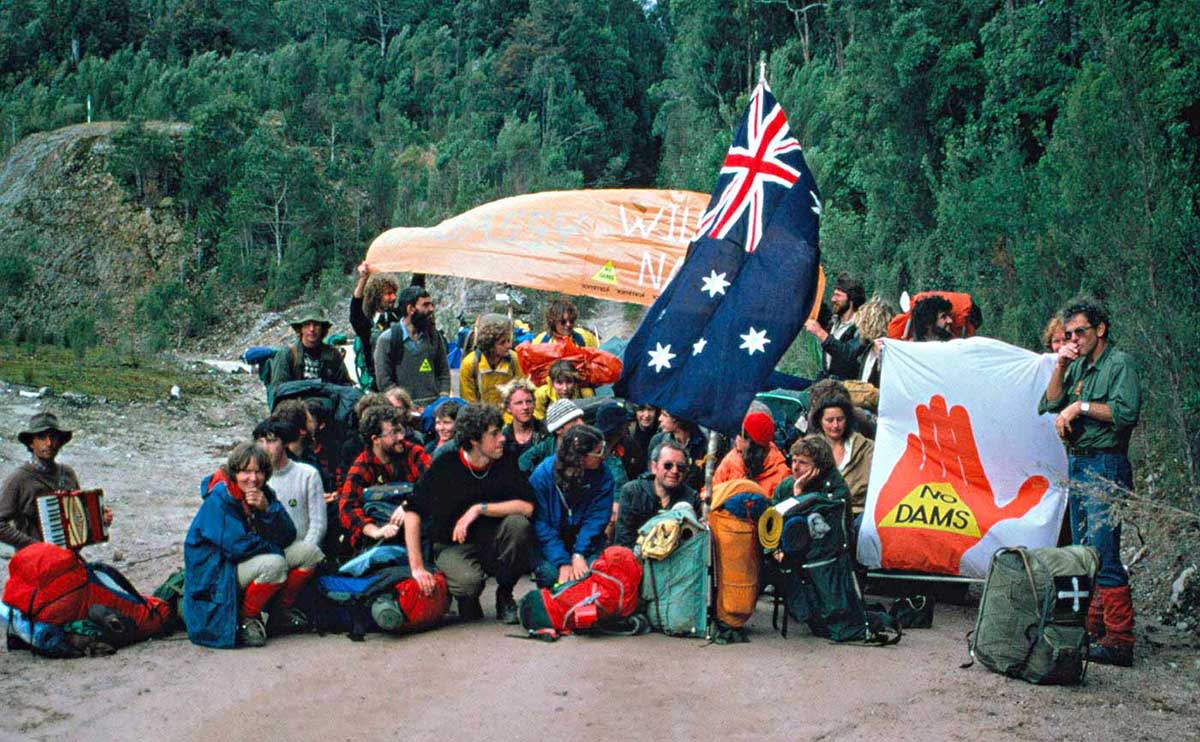
Protesters at the Franklin River, 1982

Then, there are ultraleftist strategies. They reject liberal ideas about appealing to the good will of the ruling class, and don't want to work within the boundaries of the democratic system. But they still don't see an alternative to the power of the ruling class or the government; instead, they involve generally small numbers of people in militant tactics that "break the rules", hoping to convince the ruling class that the cost of doing business in this way is too high. These tactics always appeal to those looking inward, within a small radicalised community, and trying to find some shortcut to change.

The most succesful example of this kind of strategy is Miranda Gibson's tree-sit to protect Tasmania's forests. She climbed up a tree in an area scheduled for logging in December 2011, putting her body in the way of the saws to demand the Styx valley, home to the world's tallest hardwood trees, be added to Tasmania's World Heritage Area. After over a year of her sit, with international attention on the cause, the Federal government announced an extra 170,000 hectares of forest would be nominated for protection. Gibson still holds the record for the longest tree-sit in Australian history, at an astonishing 449 days.

As great a victory as this was for Australia's woodlands, these kinds of tactics alone cannot protect forests for good. Companies will gladly sit out individual actions, or even empowered communities. This is apparent in the bid by Tony Abbott's following government to have the forest delisted - thankfully, one which failed. But they will try again.

Gibson's campaign gained so much success because part of her strategy was also to share her story, via solar-powered computer, and win mass support for the campaign. And this brings us to the third strategy for change identified by Camejo: independent mass action.

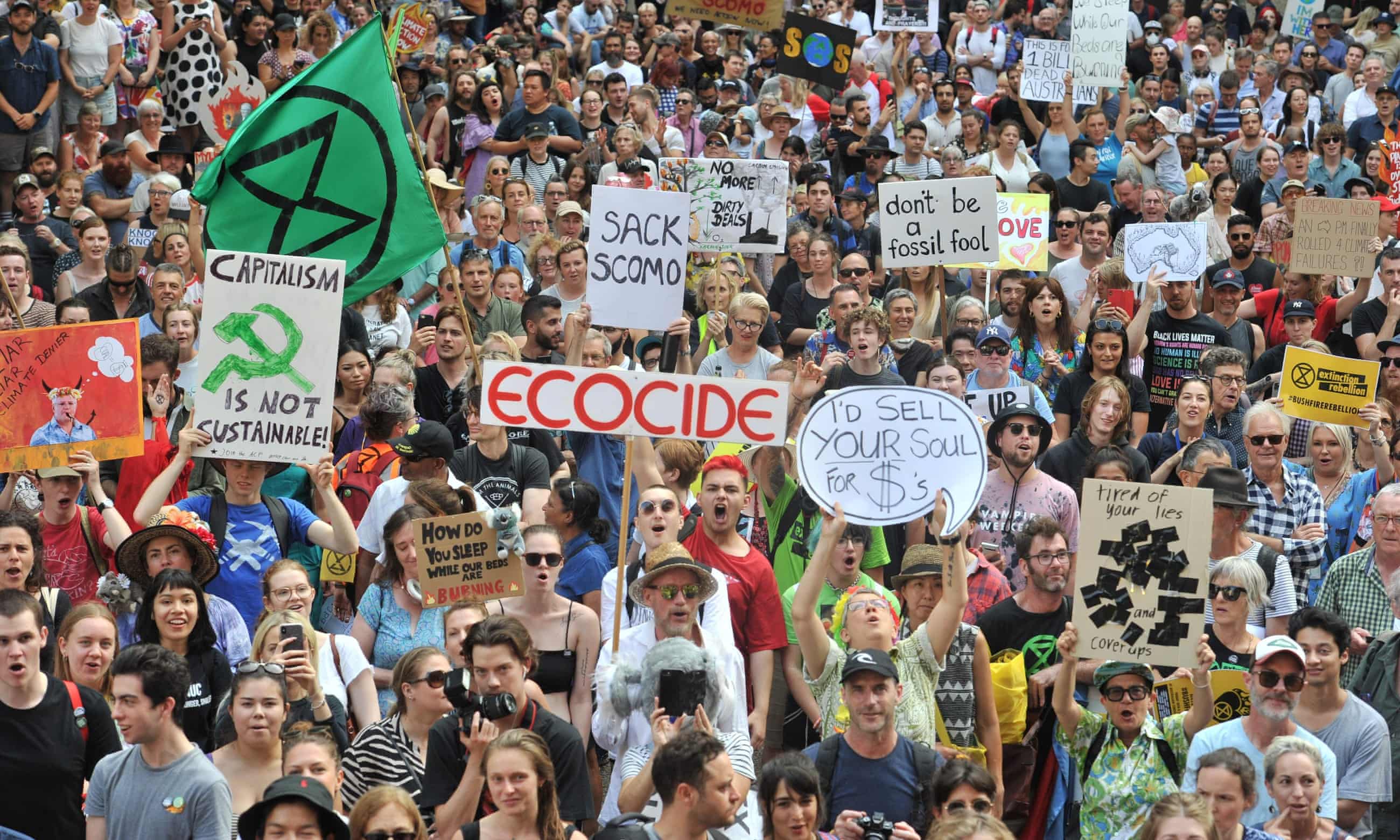
Bushfire crisis protest in Sydney, January 2020

An independent mass action strategy aims to challenge the power of the ruling class - not by activists going through the democratic channels, or by making small militant actions, but by looking to the other great class power in society - that of the working classes. Its aim is to draw the great masses of society into struggle themselves, not struggle on their behalf. It aims to break the rules - not the laws that say we can't protest on private property, but the fundamental rules about who owns society.

The simplest understanding of an independent mass action strategy is that it aims to call mass street rallies. And this is an important tactic; for the environment movement, the most recent examples of mass rallies which cut through the white noise and brought masses into action in Australia are the #climatestrike and School Strike 4 Climate actions of late 2019. They were followed up by the bushfire emergency rallies demanding the government do more - to protect the people, and landscapes, vulnerable to climate change through better funding for emergency services and meaningful climate action. Those Australian and global mass actions, while unsustained, have led to a real shift in the conversation on climate change in this country.

However, independent mass actions don't only mean the one tactic of street rallies. They can use any particular form of activism that brings masses into action, with a goal of exercising their own power, rather than appealing to the ruling class.

Worker's struggle, in the form of strikes, is another key tactic in a mass action perspective. Today in Australia strikes are only allowed while negotiating a new agreement, but we have a proud history of worker's strikes for the environment in the form of green bans - the campaign by the Builders Labourers Federation (BLF) to protect parklands and historic sites within Sydney. In the initial fight to protect Kellys Bush Park, the workers threw down the gauntlet to developer AVJennins:
If you attempt to build on Kelly's Bush, even if there is the loss of one tree, this half-completed building will remain so forever, as a monument to Kelly's Bush.
Today is a sad day for that history; Jack Mundey, the leader of the NSW BLF through those struggles, has passed away at age 90. May he rest in power.

The green bans campaign was one of the most effective forms of independent mass action ever used in Australia. It utilised the independent power of the workers, uniting with environmental and anti-corporate activists, against the wishes of capital - tying up $3 billion (in 1974 AUD) of investment. This independent mass action had to be quashed, and so the federal leadership of the union intervened, standing down Mundey and ending the policy of green bans. Of course, it later turned out the federal leader of the BLF, Norm Gallagher, was taking bribes from the construction bosses, leading to the closure of the BLF and its replacement by the CFMEU.

The CFMEU is militant in action for wages, but it has inherited the anti-environmental perspective of the latter BLF. Taking down the "24 hour construction sites" and pro-fossil fuel bureacracy of the CFMEU is a key struggle for climate activists. A CFMEU green ban ban on cutting down old-growth forests would bring the industry to a meaningful halt, and stop devestating climate change. The CFMEU leadership might be deluded enough to think climate change isn't an issue that will impact blue-collar workers in Australia, or that they can't adopt a more radical stance - but the history of the BLF shows otherwise.

These campaign strategies or orientations are far from exclusive - and they can sometimes bleed over into each other, or be complimentary. Individual tactics can fit into any of the three perspectives. Mass rallies can make liberal demands, direction action tactics can compliment legal or mass campaigns. Miranda Gibson's tree-sit did exactly this. And Tasmania's best-known fight to protect the environment, the fight to stop the Franklin Dam, utilised all kinds of tactics - including a write-in campaign on the 1981 state referendum that won an astonishing 45% of the vote.

So, what should you do right now?

I encourage everyone to get involved in all of the above kinds of campaigns to protect our forests as much as they feel is right. From my point of view, though, both the severity of the climate crisis and the centrality of capitalism in the crisis, mean we must take a mass action approach to climate activism.

Wednesday, 23 December 2015

30 olive trees

So far, since asking for donations for Palestine this Christmas, we've raised donations for 30 olive trees. A massive thankyou for everyone who has donated so far! Certificates have been emailed to all donors.


However, there's still a lot more to be done. We will be planting in the days after Christmas, as part of To Be There's Christmas tour program, as well as in February and March. The field we are working on after Christmas can be planted with 60 to 100 trees, so there's still plenty of room for more donations.

image courtesy of The Palestinian Olive

With the news of more attacks on Palestinian farmers in the West Bank, and the continuing death toll from extrajudicial killings by Israeli shooters, both military and civilians, our solidarity is more important than ever. Please donate! Get in touch via email if you are interested.


Sunday, 27 July 2014

Freedom and justice For Gaza: Boycott action against 7 complicit companies | BDSmovement.net

Freedom and justice For Gaza: Boycott action against 7 complicit companies | BDSmovement.net


Israel’s
regime of occupation, settler-colonialism and apartheid is once again
committing heinous massacres on the Palestinian people in Gaza.


Israel enjoys criminal impunity because of the direct support from
governments in the North America and Europe but also from corporations
that are implicated in the Israeli occupation and egregious human rights
violations.


There are dozens of companies that play an active and ongoing role in
facilitating Israeli apartheid. In light of the exceptionally bloody
massacres Israel is currently committing in Gaza, the Palestinian BDS
National Committee (BNC) suggests to BDS activists and every
conscientious person and organization around the world to target the
following 7 companies as a matter of urgency.

- See more at:
http://www.bdsmovement.net/2014/freedom-and-justice-for-gaza-boycott-action-against-7-complicit-companies-12386#sthash.ZwAsxIe9.dpuf
Israel's regime of occupation, settler-colonialism and apartheid is once again committing heinous massacres on the Palestinian people in Gaza.
Israel enjoys criminal impunity because of the direct suppport from governments in North America and Europe but also from corporations that are implicated in the Israeli occupation and egregious human rights violations.


There are dozens of companies that play an active and ongoing role in facilitating Israeli apartheid. In light of the exceptionally bloody massacres Israel is currently committing in Gaza, the Palestinian BDS National Committee (BNC) suggests to BDS activists and every conscientious person and organisation around the world to target the following 7 companies as a matter of urgency.


At a time of such horror and such hypocrisy from our leaders here in Australia and elsewhere in the world, the movement for BDS against Israel gives us a way to take the power of solidarity into our own hands and stand up for the Palestinians.


Israel’s
regime of occupation, settler-colonialism and apartheid is once again
committing heinous massacres on the Palestinian people in Gaza.


Israel enjoys criminal impunity because of the direct support from
governments in the North America and Europe but also from corporations
that are implicated in the Israeli occupation and egregious human rights
violations.


There are dozens of companies that play an active and ongoing role in
facilitating Israeli apartheid. In light of the exceptionally bloody
massacres Israel is currently committing in Gaza, the Palestinian BDS
National Committee (BNC) suggests to BDS activists and every
conscientious person and organization around the world to target the
following 7 companies as a matter of urgency.

- See more at:
http://www.bdsmovement.net/2014/freedom-and-justice-for-gaza-boycott-action-against-7-complicit-companies-12386#sthash.ZwAsxIe9.dpuf
regime
of occupation, settler-colonialism and apartheid is once again
committing heinous massacres on the Palestinian people in Gaza.


Israel enjoys criminal impunity because of the direct support from
governments in the North America and Europe but also from corporations
that are implicated in the Israeli occupation and egregious human rights
violations.


There are dozens of companies that play an active and ongoing role in
facilitating Israeli apartheid. In light of the exceptionally bloody
massacres Israel is currently committing in Gaza, the Palestinian BDS
National Committee (BNC) suggests to BDS activists and every
conscientious person and organization around the world to target the
following 7 companies as a matter of urgency.

- See more at:
http://www.bdsmovement.net/2014/freedom-and-justice-for-gaza-boycott-action-against-7-complicit-companies-12386#sthash.ZwAsxIe9.dpuf
Israel’s
regime of occupation, settler-colonialism and apartheid is once again
committing heinous massacres on the Palestinian people in Gaza.


Israel enjoys criminal impunity because of the direct support from
governments in the North America and Europe but also from corporations
that are implicated in the Israeli occupation and egregious human rights
violations.


There are dozens of companies that play an active and ongoing role in
facilitating Israeli apartheid. In light of the exceptionally bloody
massacres Israel is currently committing in Gaza, the Palestinian BDS
National Committee (BNC) suggests to BDS activists and every
conscientious person and organization around the world to target the
following 7 companies as a matter of urgency.

- See more at:
http://www.bdsmovement.net/2014/freedom-and-justice-for-gaza-boycott-action-against-7-complicit-companies-12386#sthash.ZwAsxIe9.dpuf
Israel’s
regime of occupation, settler-colonialism and apartheid is once again
committing heinous massacres on the Palestinian people in Gaza.


Israel enjoys criminal impunity because of the direct support from
governments in the North America and Europe but also from corporations
that are implicated in the Israeli occupation and egregious human rights
violations.


There are dozens of companies that play an active and ongoing role in
facilitating Israeli apartheid. In light of the exceptionally bloody
massacres Israel is currently committing in Gaza, the Palestinian BDS
National Committee (BNC) suggests to BDS activists and every
conscientious person and organization around the world to target the
following 7 companies as a matter of urgency.

- See more at:
http://www.bdsmovement.net/2014/freedom-and-justice-for-gaza-boycott-action-against-7-complicit-companies-12386#sthash.ZwAsxIe9.dpuf
Israel’s
regime of occupation, settler-colonialism and apartheid is once again
committing heinous massacres on the Palestinian people in Gaza.


Israel enjoys criminal impunity because of the direct support from
governments in the North America and Europe but also from corporations
that are implicated in the Israeli occupation and egregious human rights
violations.


There are dozens of companies that play an active and ongoing role in
facilitating Israeli apartheid. In light of the exceptionally bloody
massacres Israel is currently committing in Gaza, the Palestinian BDS
National Committee (BNC) suggests to BDS activists and every
conscientious person and organization around the world to target the
following 7 companies as a matter of urgency.

- See more at:
http://www.bdsmovement.net/2014/freedom-and-justice-for-gaza-boycott-action-against-7-complicit-companies-12386#sthash.ZwAsxIe9.dpuf
Israel’s
regime of occupation, settler-colonialism and apartheid is once again
committing heinous massacres on the Palestinian people in Gaza.


Israel enjoys criminal impunity because of the direct support from
governments in the North America and Europe but also from corporations
that are implicated in the Israeli occupation and egregious human rights
violations.


There are dozens of companies that play an active and ongoing role in
facilitating Israeli apartheid. In light of the exceptionally bloody
massacres Israel is currently committing in Gaza, the Palestinian BDS
National Committee (BNC) suggests to BDS activists and every
conscientious person and organization around the world to target the
following 7 companies as a matter of urgency.

- See more at:
http://www.bdsmovement.net/2014/freedom-and-justice-for-gaza-boycott-action-against-7-complicit-companies-12386#sthash.ZwAsxIe9.dpuf
Israel’s
regime of occupation, settler-colonialism and apartheid is once again
committing heinous massacres on the Palestinian people in Gaza.


Israel enjoys criminal impunity because of the direct support from
governments in the North America and Europe but also from corporations
that are implicated in the Israeli occupation and egregious human rights
violations.


There are dozens of companies that play an active and ongoing role in
facilitating Israeli apartheid. In light of the exceptionally bloody
massacres Israel is currently committing in Gaza, the Palestinian BDS
National Committee (BNC) suggests to BDS activists and every
conscientious person and organization around the world to target the
following 7 companies as a matter of urgency.

- See more at:
http://www.bdsmovement.net/2014/freedom-and-justice-for-gaza-boycott-action-against-7-complicit-companies-12386#sthash.ZwAsxIe9.dpuf

Sunday, 8 June 2014

Alliance Voices: Rebuilding Socialist Alliance

Alliance Voices: Rebuilding Socialist Alliance


This is probably the best, most honest and clear-sighted contribution to Alliance Voices I have read since I became a member of the Alliance. Ewan clearly lays out all of the problems which have crept into organisational practices in recent years and identifies ways that we can go about breaking them down. Although the conference is presently taking place I'm not sure if this perspective will gain any traction; however, it has already informed some amendments to the party-building resolution, some of which have been adopted already. More on that later.

Alliance Voices: Rebuilding Socialist Alliance Youth Work

Alliance Voices: Rebuilding Socialist Alliance Youth Work


This piece of PCD for the Socialist Alliance's 10th national conference is some interesting reading on the new direction Resistance will be taking. I argued strongly against making Resistance the youth of the Socialist Alliance two years ago in Adelaide; however, the situation in the party has changed considerably since then, and I think this has driven the need to regroup youth leadership moreso than "objective conditions".


Tuesday, 27 May 2014

One Year Ago

One year ago, I stopped being a full-time activist.

One year ago, exhaustion and anxiety reached saturation point. I couldn't sleep and I couldn't get out of bed.

There were several events which occured in the weeks leading up to this which I've written about here and here, but they weren't the final straw.

The EduFactory conference took place over a long weekend, and I spent my time at the conference involved in a variety of workshops almost exclusively attended by the usual suspects of the Sydney student left. The Alliance didn't have much impact on the discussion which formed a network of student activists, where our criticisms were certainly in the minority. In the end, I realised I'd felt exhausted from day one, underprepared and like we were going through the motions.

Over the course of the last year (and a bit), I've taken time to think about what I need to do to take care of myself mentally and physically, and assess what I want to do with my life.

So, what have I been doing?

I've been writing again, in fits and starts. It still feels like the most useful thing I can do with myself, but it's harder to make space than it was when I was studying it, so I'm working on ways to improve that.

I've been selling Green Left every other week, and occasionally writing an article - there's one which haven't made it up here yet, look forward to that soon.

I've been playing a lot of Eve Online. And other games like Minecraft and Borderlands. But mostly Eve. It's addictive, yo...

I've been enjoying some good football and some great memories

I've been listening to a lot of podcasts for the first time since 2006. Politically - Democracy Now, ABC Big Ideas TV, Jadaliyya's Jad for Reel. Otherwise - Soccer Stoppage Time, High Drag Eve Online, Welcome to Nightvale.

And I've been preparing to go travelling again, this time with my partner. More on this as it develops.

Thursday, 26 September 2013

When the wizard gets to me, I'm asking for a smaller heart

As a huge fan, I'm really disappointed to hear that, despite looking at the situation closely, Amanda Palmer has decided to cross the picket line of the Palestinian call for a cultural boycott of Israel and organise a gig in Tel Aviv.

I first came across Amanda Palmer around 2007; I was playing in a band with a couple of schoolfriends, and one of them suggested we play Coin Operated Boy. We weren't particularly good, but it was fun, and I borrowed the Dresden Dolls' whole discography at the time to listen to. 

Track forward a few years, and, after buying tickets to the gig when it was supposed to be in February, I had the honour for the first time of rocking out with AMANDA FUCKING PALMER live for myself earlier this month. It was at my partner's insistence that we got the tickets; she also backed the AFP kickstarter.


The stories of friends who had attended concerts left me with high expectations for the show; even so I was blown away. It was truly one of the most amazing gigs of my life. Although there was no crowd surfing pashes for me or my friends, at one point during 'Do It With A Rockstar' she did thrust the microphone into my mouth. I nearly fainted!


But I'd never be able to appreciate her music in the same way if she goes ahead with this gig. Simply taking a tour with Breaking the Silence, which she's cited as the reason she tipped to booking a gig, doesn't neutralise performing a public show in an apartheid state.

I hope Amanda (or anyone reading this) have read the PACBI website - if you haven't, you should really consider some of the arguments rebutting common reasons to break the boycott put here. Particularly worth reading in this context:

2. Why Not Boycott Other Human Rights Offenders Too?

...Israel is today the only state practicing a three-tiered system of oppression – occupation, colonization and apartheid – while being treated by Western states as part of their “democratic club” and, consequently, receiving unlimited political, economic, diplomatic, academic and cultural support from them. This entrenched and persistent Western complicity is precisely what perpetuates Israel’s colonial oppression and makes it a moral obligation for citizens of the West to endeavor to end their states’ respective complicity in Israel’s crimes. Striving to end collusion in human rights violations should be the absolute minimum that we expect from any conscientious artist or cultural worker.

I think AFP should go to Tel Aviv, and play for the kickstarter obligations. And I think she should take the tour with Breaking the Silence too. Visit the old city of Hebron, where a few hundred settlers terrorise the 10,000 Palestinian inhabitants in an attempt to ethnically cleanse the areas around the Ibrahim Mosque/Tomb of the Patriarchs. Visit Nablus, go through checkpoints where Palestinians are routinely denied entry while settlers are allowed to drive right though. Visit Bethlehem's 300 checkpoint at 4am, when Palestinian workers from the territories have to line up to try and get into Israel to start their jobs at 8am. If she is like me, then seeing these things for herself will break her heart and fill her with rage. If not, then I can respect that. Nonetheless, as someone who is totally on the right side of politics and who put on a 'Fuck Tony Abbott' T-shirt proferred by a fan during the signing after the gig, simply having that experience, documenting it, and sharing it with her fans will be a powerful thing.

But to play a public gig in Israel is to cross the picket line and say - this isn't cultural and religious apartheid, just another country with a few problems. And I would lose a lot of respect for Amanda Palmer and her amazing, challenging, uncompromising body of work if she does that.

Saturday, 25 May 2013

Downtime

While getting media calls about protests for Palestine or ASIO harassment is a great opportunity for exposure of radical politics, this has been an exhausting year and I've been simply unable to function effectively at anything I find important. At the moment I'm taking a break from activism and getting my life in order. I'm updating this blog with various things I've written about and haven't posted (mostly to do with USYD, Tunisia and Palestine) but right now my head is somewhere else.

This might not be the most opportune time, but still - 9000 PAGEVIEWS, w00t!

Friday, 24 May 2013

Why Boycott Max Brenner

Alternative title: Why Michael Danby thinks I'm a bit of a dill.

The Australian ran an article on May 2 that claimed “the boycott, divestment and sanctions movement has been caught on camera admitting ‘there isn't really any connection’ between Australian Max Brenner chocolate shops and Israel”.

The representative of the movement quoted was yours truly: the quote was from a video made by pro-Israel schoolfriends of an organiser at the November 20 rally in Parramatta, whose questions I tried to answer in such a way that their attacks on our motives would gain no traction. Clearly I failed...

This is my response to the beat up, which had continued in the pages of AJN and the Australian almost daily since then. It was originally published in Green Left Weekly; it was first submitted to the Australian but not published.

***

When I visited Israel and the Occupied Palestinian Territories in 2011 to take part in environmental volunteer projects, apartheid was plain to see.

West Bank Palestinians were restricted in what roads they could travel on to tend to their fields. Activists were arrested when they tried to highlight this injustice by boarding buses in Israeli settlements, echoing the Freedom Rides fighting segregation in the US.

Every Palestinian house had rainwater tanks because the mains would run dry in summer; the Israeli settlements had irrigated lawns that could rival Sydney's north shore.

So when I came home for Christmas and showed my family the photos I took in the West Bank, they could easily see the comparison. For my family, it's one close to home — my parents met and married in South Africa under apartheid.

However, calling Israel an "apartheid state" means something much more than just a comparison with South Africa before 1994.

The Rome Statute of the International Criminal Court, which came into force in 2002, defines apartheid as "an institutionalised regime of systematic oppression and domination by one racial group over any other racial group or groups". This is the crime of which Israel is guilty, with laws of citizenship that discriminate against non Jews, dozens of other examples of institutional racism, and legal distinctions between "Israeli Arabs", West Bank residents and East Jerusalemites — of which 80% live in poverty, according to a recent report.
This is why I campaign for boycott, divestment and sanctions (BDS) against Israel.

The parent company of Max Brenner — a chocolate shop company that has become the focus for the BDS campaign in Australia — is the Strauss Group. It is not merely a financial partner in this apartheid the way many multinationals are. Its support of the Israeli military is as odious as to donate care packages to commandos of the Golani and Givati brigades to "sweeten their special moments".

These brigades are Israel's shock troops. The Givati brigade reached the farthest into Gaza's borders of all units involved in the 2009-10 invasion. The Golani brigade took up station on checkpoints in the Palestinian city of Hebron shortly after I visited the West Bank. Christian Peacemaker Team activists documented a rise in the number of serious human rights violations against the Palestinian people of Hebron at the time.

Max Brenner Australia's relationship to the Strauss group is plain to see, although the company tries to hide it.
 
In an interview in the Australian over Christmas, the general manager of Max Brenner in Australia, Yael Kaminsky, said Max Brenner Australia "never got involved with the Strauss Group ... we only have the franchise rights in Australia and we report to the office of Max Brenner that is based in New York".

Yet the Strauss Group's annual report last year said Max Brenner International in the US is wholly owned by Strauss USA, itself a wholly owned subsidiary of Strauss Group Ltd. The report said "the [Strauss] Group operates chocolate bars" in Australia.

Boycotting Max Brenner has nothing to do with the identity of the company's owners, just as the campaign to boycott the French.engineering firm Veolia for its operations in the occupied territories has nothing to do with the religion or race of its bosses.

It is about raising awareness of the Israeli government's crimes in Palestine, and targeting companies involved in those crimes like Strauss (or their local franchises and operations, which also includes two brands of dips, Copperpot and Red Rock Deli).

If the owners of Max Brenner are as truly independent of ties with Israeli apartheid as they claim, they can easily put an end to protests outside their stores by rebranding their store, handing back the franchise rights, and sending a signal that people of all backgrounds condemn Israel's crimes.

Thursday, 23 May 2013

ASIO Harassment

Originally published by Green Left Weekly

On Tuesday the 16th of April, I received a knock on the door from two members of the Australian Security Intelligence Organisation, better known as ASIO.

The two told me they would like to have a conversation. When I asked what they wanted to speak about, they told me they were doing their job - protecting national security – and had a few questions about my involvement in activism in Sydney.

Apparently the latest threat to national security is “political violence” in the activist community. As a Palestine solidarity activist involved in organising the Sydney rally to commemorate Nakba (the catastrophe, when the state of Israel was created and Palestinians dispossessed) the agents wanted to speak to me about any concerns I might have, or for me to identify any individuals who I was worried might be responsible for acts of political violence.

I replied that the only fears of violence that I had from my involvement in Palestine solidarity activism were from the far right groups and individuals who often organise counter mobilisations – or simply send threatening and intimidatory emails, messages and phone calls in an attempt to stop or derail our protests and other events.

I was also questioned by the employees about the recent rally against police violence at Mardi Gras – which I didn’t attend – and the picket lines at the University of Sydney, where I study, organised by the National Tertiary Education Union. Once again, my answer was that the only violence I have seen in my time as an activist has been initiated by those seeking to silence our right to protest. 
 
In the case of Sydney University, this comes from members of the “Public Order and Riot” Squad of the NSW Police force, who have been sentin to break up the picket and other protests to defend education and student rights. At the latest picket, they were responsible for breaking one student's leg and another's ribs.

Other people in Sydney and Melbourne involved in campaign groups have also been approached by ASIO and asked not to speak about these visits.

In a context of the “war on terror” overseas — which has involved Australian troops involved in wars in Iraq and Afghanistan for the past decade — there is a war on civil liberties at home.


ASIO’s mandate is broad and without scrutiny. The organisation is responsible for providing security assessment for refugees seeking asylum in Australia, with no public oversight. Tamil asylum seeker Ranjini and her two sons are locked up in Sydney’s Villawood Detention Centre because ASIO decided she is a “security risk”.
 
Security organisations have had their powers expanded and budgets increased by Labor and Coalition governments, and consequently have increased their monitoring of Australians.


As $900 million is being slashed from our universities through an “efficiency dividend”, the new ASIO headquarter building in Canberra is facing yet another costly delay in opening. After being estimated to cost $460 million when construction began under the Howard government, the full price tag is now being estimated at over$631 million dollars – over 2/3 of the university cuts.

Construction has had no parliamentary oversight, and there was no public consultation.

The Australian Security Intelligence Organisation Act 1979 (the ASIO Act) even makes it illegal to publish the identity of any officer, agent or employee of the organisation. 

Last year, Green Left Weekly reported on activists involved in pro-Palestine and pro-Tamil solidarity campaigns in Adelaide who had also been visited by South Australian Police working in “security and intelligence”.

These visits are an attempt to intimidate people into ending their involvement in legitimate political organisations. Organising and attending demonstrations is not illegal and people involved in these activities should not be monitored by ASIO.

There is no law that prevents people from speaking publicly about a visit from ASIO. Shining a light on these practices is important to show that we will not be intimidated into exercising our democratic right to protest.


If the powers that be were serious about national security, they might abolish this spy agency - and withdraw our troops from the costly and unjustifiable occupation of Afghanistan - instead of harassing activists who are only exercising their democratic right to protest.

Wednesday, 26 December 2012

Alliance Voices, Revolution and Transition

In light of recent developments (I'd argue both the the continuing crisis in Europe, the advancing revolutionary situation in the Middle East / North Africa (MENA) region, and the continued development on the Latin American alternative, which are all showing in practice the strengths and limitations of different approaches to the question of revolutionary leadership and unity, as well as the subjective ones of the Socialist Alternative's "turn to unity"), there has been some interesting discussion in the lead-up to the next national conference of the Socialist Alliance. I'm going to look at some particular contributions from Alliance Voices, and some related posts, as part of the process of working on some PCD of my own. There have been other good contributions so far - including this piece from three leaders of Resistance which is well worth reading - that I won't comment on just yet.

Nick Fredman, a member of the Alliance from Melbourne branch, has put forward an amendment to the Towards a Socialist Australia (TASA) document to tighten up some sections - particularly, incorporating an explicit call for "Revolution" in 'How will we get there?'. This is, in part, driven by the call put out by Socialist Alternative for unity amongst "Revolutionaries", counterposing it against unity with the "Reformists", whoever that might mean (during discussion at a recent event in Sydney Josh Lee from Socialist Alternative did say that this didn't mean the Alliance...) - which has triggered seemingly endless back and forth on social media.

Graham Matthews, from Sydney West branch, has responded with an argument that the use of the R word is implicit in the TASA document and our perspectives, isn't necessary, and puts up barriers in actually regrouping working class leadership:
"there is certainly no evidence that an important task facing the (revolutionary) socialist movement in Australia today, is convincing large numbers (or even relatively small numbers) of reformist socialists that socialism can only be won through extra parliamentary struggle and, ultimately, social revolution...
In this context in Australia then, where the level of the crisis is so acute, yet where the forces of working class resistance are so defuse and ideologically confused - why would the (relatively) few organised socialists, want to place an ideological and organisational barrier between themselves and those who are coming into political motion?
Peter Boyle, from Sydney central branch (and national co-convener of the Alliance), has weighed in on this debate and other proposals arguing that making our revolutionary politics explicit in material like TASA isn't a barrier, but it shouldn't be done just to defend the Alliance from accusations of "Reformism". He argues that we should explain revolution in a way which draws on Australia's history and the real context of today:
our guide is not just what we (or others in the left) understand, or want, but also where the consciousness of broader layers moving into struggle against the capitalist system is at... most people come to a stronger realisation of [the] need to organise systematic resistance to the violence of the minority only in the process of struggle.
Peter's piece references and draws on Peter Camejo, whose work I think needs to be included in this discussion, particularly Liberalism, Ultraleftism, Mass Action.

There's another that's come up in discussion - Trotsky's Transitional Program, and whether or not it should have any bearing on this discussion, which I wanted to weigh in on a little bit. Before that, I think it's initially worth noting the following quote from Doug Lorimer in the introduction to the Transitional Program published by Resistance Books:
Under certain circumstances, agitation around any of these different types of demands can serve to mobilise working people in mass anti-capitalist struggles. It is the mobilising potential of any of these types of demands at any particular conjuncture in the class struggle that is of primary interest to revolutionists. It is a basic fact of political life that people who are united with others in struggle are more open to radical ideas and new forms of action than those who are atomised and quiescent.
Omar Hassan from Socialist Alternative, who took up this point of transitional demands in a note on Facebook (apparently in reference to a comment made by an Alliance comrade at a recent event in Melbourne) argued that the Transitional Program is hugely problematic and the divide between our ultimate goal and the struggles of today "cannot be synthesised on paper, they must be embodied in the traditions of a revolutionary party." I find this rather problematic. He is certainly right to say "demands don’t create revolutionary crises, objective circumstances do" - but there is a whole world of advances the working class in Australia could be making short of capitalising on a revolutionary crisis to overthrow capitalist property relations. In the words of Trotsky, "transitional" demands lead to "one final conclusion: the conquest of power by the proletariat" - but there is a whole lot of struggles to be had between now and that final point which can also be considered "transitional", and it's crucial that we make some advances on that front now. Just because Trotsky misread the revolutionary potential of the impending crisis in 1930 doesn't invalidate the concept as a whole.

Many of the examples of transitional demands Trotsky counterpoises to the "minimum" demands of the Stalinists - indexation of wages to inflation, open the corporate books, no secret diplomacy - are struggles that have at specific times or in limited ways, since been won (or forced upon our rulers, in the case of WikiLeaks) - and although this hasn't been a "bridge" to worldwide socialism yet, at times times they have helped to galvanise various other struggles - WikiLeaks played key roles in the change in government in Kenya or the overthrow of Ben Ali in Tunisia, for example.

"We cannot do away with the schism between minimum and maximum program," states Omar - yet the value of the concept of transitional demands is in approaching the fight for minimum demands - ie reforms - in a strategic way which helps to develop the power of the working class and does actually connect our struggles for "minimum" demands today to our broader strategic vision. To strike at the "weakest point of capitalist hegemony" is a good aim, but to me it only seems of use if we're actually using that strike to develop momentum, win recognition, and actually begin to solve the question of leadership by drawing the broadest possible forces into radical struggle in order to further radicalise them.

This is to me an example of a transitional demand - one which may or may not be able to granted under capitalism, but which brings socialist revolution closer. That is our goal as revolutionaries, after all - for our struggles today to be hastening revolutionary overthrow of class society. And history has shown us that victories in certain key social movements has led to a wave of increased class struggle on a whole variety of fronts - from the success of civil rights & indigenous rights movements in the US and Australia helping to catalyse the upsurge of the 60s and 70s, to the overthrow of Ben Ali & Mubarak empowering already rampant trade union struggle, civil rights struggles by minorities, the women's movement or those of the shanty towns.

This isn't a shortcut to revolution; it's a perspective that putting our shoulder to the wheel in struggles today and making them as successful as possible, not only propagandising about the dictatorship of the proletariat from the sidelines, is the best method of convincing people of the need for a revolution and winning them to a revolutionary party.

Omar and I are both active campaigners for Palestine solidarity here in Australia; I think the demands of the BDS movement are a perfect example of transitional demands. The three pillars of the movement - an end to the apartheid wall, the right of return for refugees, and full civil rights for Palestinians inside Israel - are difficult to imagine ever being granted by the present existence of Israel in its current form as an apartheid state and imperialist attack dog for the region, as their implementation would critically undermine the possibility of maintaining that project with a facade of democracy. But this doesn't mean the struggle for those demands is a dead end reform we should stop fighting for - the inability of Israel to grant those reform helps to develop and broaden awareness of the nature of Zionism as a racist ideology underpinning imperialist dominance in the MENA region. And any cave-ins from the Israeli state on these points will curb the power of imperialism in the region, even if only fractionally.


The rallying cries of the Russian revolution - peace, land, bread - were certainly key transitional demands (nobody's maximum program), and those for real democracy, redistribution of wealth and dignity being raised in the MENA region today likewise fit the bill. Tad Tietze, in the discussion following Omar's post, argued that a demand like climate justice is a similar example of such a transitional demand to struggle for today; at one point this was the rallying cry for a movement of thousands, and although the last two years have seen a decline in such activism, I think every new climate disaster reflects the burning vitality of that demand.

How does this all relate to the above discussion about the goals and politics of the Alliance? Omar gives a throwaway comment that "it is also relevant because those seeking to justify the Alliance program seek to hide behind references to their alleged transitionality." This comment (seeming at odds with the above comments that the Alliance isn't reformist) does reflect a certain truth, but I feel it's being expressed as a pre-emptive hostility over a different tactical perspective for Australia today; a different approach to the question that's been raised - what role should the party play in making the revolution? And what does this mean for our activism today? I think this question is shaping the above Alliance Voices debates, as much as Alternative's call for unity.

The certain truth: I do agree with Peter and Nick that we should be including explicit statements that our ultimate goal is working class revolution in the Alliance constitution or our chief propaganda tool, the TASA document - but Graham is right that the key thing to be done today is win more to socialism, not convince other socialists of the correct path, and that requires we throw our energy into the struggles at the grassroots today, particularly aiming for the most transitional demands to strip the emperor's clothes from Rinehart, Palmer and the whole capitalist system and neoliberal offensive, if we want to educate and unite the class-conscious workers into a force which can take advantage of real revolutionaries opportunities.

But the important thing isn't uniting on our "maximum" program - for now, it should be left at the revolutionary overthrow of class society by the masses. In this low ebb of class struggle, it's far more important that we focus our attention on the immediate "minimum" & "transitional" kinds of tasks to regrow a pole of class struggle today. It's heartening to see the Socialist Alternative turn to unity and agree that we should unite on "a socialist program for Australia today"; but is that program to win more ones and twos to Marxism, or is it to build class struggle as a whole and win a whole generation of activists? As a Marxist in the Alliance, my perspective is certainly for the latter.

Friday, 21 December 2012

Academics right to uphold Israeli boycott

Resistance Sydney released this statement on December 14. 


The Sydney University (USYD) Resistance club condemns the attack by the Australian on the university’s Centre for Peace and Conflict Studies for its decision to uphold a boycott of Israeli academic institutions.

The head of the Centre for Peace and Conflict Studies, Jake Lynch, declined a request from Israeli academic Dan Avnon to include him as a contact on his application for an academic exchange. His refusal upheld the boycott, divestment and sanctions (BDS) campaign which refuses academic, cultural and sporting institutions in protest against Israeli apartheid.

Christopher Pyne, federal MP for Sturt, alleged the decision would open the university up to "ridicule".

In fact, USYD would be joining other universities around the world, such as the University of Johannesburg who last year decided to end all relationships with Israeli academic institutions.
This year campus representative bodies across the world have also decided to divest from contracts with companies that profit from the Israeli occupation of Palestine.

The Coalition’s attack is an attempt to intimidate universities and academics of conscience out of supporting Palestinian civil society’s call for an academic and cultural boycott of Israel.

“Christopher Pyne is on the wrong side of history”, said USYD Resistance club president Patrick Harrison.

“The fact that he is attacking academic freedom by intimidating those of conscience who heed the Palestinian call to break all ties with Israeli institutions means that he’s learnt nothing from the history books. Apartheid South Africa eventually crumbled with the support of peoples of conscience all around the world, including Australia.

“Mr Pyne’s allegation that the decision has anything to do with Dan Avnon's Jewish religion or Israeli nationality is absurd. His implicit allegation that the University department’s decision is anti-Semitic is also offensive. The Centre for Peace and Conflict Studies hosted prominent Israeli historian Ilan Pappe in September.”

"Interestingly, the Australian isn’t interested in reporting on the major links between the University of Sydney and the University of Technion in Haifa, Israel, which is heavily involved in military research. This academic link included an official exchange program.

“Earlier this year, the online journal New Matilda exposed the systematic attempts by the Australia/Israel and Jewish Affairs Council (AIJAC) to influence campus politics by providing expenses-paid tours to Israel to student politicians. This wasn't reported by the Australian either.
Clearly the Australian has an editorial bias against any criticism of Israel," said Harrison. “This is despite the fact that most Australians do not support Israel’s attacks on Palestine and that government’s flouting of international law with its illegal settlement building.”

The Australian reported on a protest organised by the Palestine Action Group on December 9 calling on consumers to boycott Israeli businesses which profit from the occupation of Palestine.

"Two people, including one well-known Islamophobe, racially targeted one young pro-Palestine campaigner and aggressively taunted and insulted him. One of these men shouldered him," said Pip Hinman, activist with Stop the War Coalition.

These provocations — in full view of the Australian reporter and photographer, and the JWire reporter — went unreported by either publication.

“The Australian's reporters, Christian Kerr — who authored many of Murdoch's attacks on the Greens support for the boycott, divestment and sanctions campaign — and Rick Morton wrote nothing about the outrageous provocations and aggression by the Islamophobe. Instead, their article alleged that “tempers frayed” because annoyed shoppers wanted to listen to Christmas carols,” said Hinman.

Saturday, 8 December 2012

Review: Leila Khaled

Submitted for publication to Green Left Weekly

Leila Khaled: Icon of Palestinian Liberation
Sarah Irving
Pluto Press, 2012

As one of the first of the Revolutionary Lives series of critical biographies published by Pluto Press, Leila Khaled: Icon of Palestinian Liberation couldn't have chosen a better focus. The book opens with the image of Khaled preparing to board and hijack flight TWA 840 on August 29, 1969; however, far more time is spent on the full span of her life, from fleeing her home as a four year old during the Nakba of 1948 to her years of work on the Palestinian National Council and in the General Union of Palestinian Women after her involvement in two hijackings.

In many ways, Leila Khaled: Icon of Palestinian Liberation is as much the story of the history of the struggle for Palestinian liberation and the role the left – particularly the role the Popular Front for the Liberation of Palestine – played in it, as it is the story of Khaled's dedicated and tireless career.

Sarah Irving's work is a must-read for anyone wishing to study Khaled's life; the primary source for many of the sections, particularly those beyond the notorious hijackings of 1969 and 1970, are a week of interviews that Irving conducted with Khaled in her Amman home in 2008 and subsequent communications. These interviews shed light on a variety of topics which have been poorly documented elsewhere, such as the role played by the organised women's movement amongst the Palestinian refugees in the neighbouring countries of Jordan and Lebanon; Irving compares them with the occasionally differing records of events held by others on the Palestinian left or in other published accounts to tease out the different narratives of the resistance's history.

Khaled's comments on the jailing or resignation of cadres of the Popular Front in the 1990s and the rise of Hamas as the alternative to the dominant Fatah leadership, as well as her positive assessment of the role the Arab Spring revolutions and the consequent March 15 movement in Palestine, also show her as a Marxist thinker still firmly grounded in the Palestinian struggle of today. She raises the key demand of the Palestinian left today – reconciliation of Hamas and Fatah, writing that the national split has "weakened the Palestinians (vis-a-vis) Israel, and also weakened Palestinian human rights on the international level."

The biography also draws together a range of perspectives on Khaled and fellow "women revolutionary fighters", and the barriers of perception they had to break through as "good Arab women." While still affirming Khaled's perspective that "[women] are under occupation, and in that we are equal in oppression with men... [but] at the same time there is social oppression, so women participate... in the national struggle and also in the social struggle," Irving considers feminist critiques of women's role within national liberation movements and references the different perspectives advanced by Palestinian women on the subject.

Khaled finishes on the future – despite the many setbacks for the movement she has lived through Khaled insists the conflict will "work itself out". Despite her status as a symbol of resistance to injustice, her humour and optimism makes Leila Khaled: Icon of Palestinian Liberation an inspiring read – and one well worth picking up for any supporter of the Palestinian cause.

Thursday, 6 December 2012

Book of the year - After Zionism

Green Left Weekly asked me, once again, to contribute to a list of books of the year. This time around, I've chosen After Zionism, co-edited by Antony Loewenstein (who also contributed his favourite choice, The Silenced Majority: Stories of Uprisings, Occupation, Resistance and Hope), and Ahmed Moor. I didn't have the space to draw out any of the themes of the different essays - Ilan Pappe's look at apartheid inside Israel draws a very different conclusion to Jeff Halper's argument for a regional national federation like the EU - so if you can get your hands on a copy and read the different arguments for yourself, do so.


After Zionism is a compilation of the different strands of thought that seek to challenge the dominant narrative in the diplomatic community – that the only possible solution to the occupation of Palestine is with two states. Its dedication – "to the Palestinians and Israelis who deserve better" – and the presence of a variety of Israeli, Palestinian and other voices reflects the shifts that have occurred since the breakdown of the Oslo accords and the second intifada, and the escalating horror of the status quo.

Speaking at events in Australia, co-editor Antony Loewenstein has been quick to point out that the book does not seek to hold the solution to the conflict, but to ask the question: What could the alternatives look like? The contributors do not all argue the same vision – but the evidence presented across the essays, considering the question globally and regionally as well as within the Israeli and Palestinian communities, together builds a compelling argument that the two-state solution is dead.

Saturday, 1 December 2012

Education is under attack - stand up, fight back!

Originally published at Green Left Weekly.

Around Australia, attacks on tertiary education have continued throughout 2012, with an ideological onslaught against the idea of well-funded public education being led by proponents of neoliberalism.

In July, Fred Hilmer, vice-chancellor of UNSW and chair of the Group of 8 Universities, a coalition of university managements, called for total fee deregulation and “cutting red tape”.

In an address to the National Press Club, Hilmer signaled that university managements intend to “play in the public policy field a lot more aggressively” when it came to government funding, modeled on the response of the mining industry to the MRRT, reported TheConversation on July 25.

He argued that capped funding requirements were enforcing a culture of “sameness” and stifling diversity in education, hampering the ability of Australian universities to compete for the international student market.

Hilmer’s address took it for granted that “a significant increase in government funding is unlikely” – and so did a report released by accounting firm Ernst and Young in October, “University of the future”, which recieved national coverage.

The report argued that major changes in the education sector are inevitable due to the “contestability of markets and funding” based on a declining level of public investment, as well as the impact digital technologies and the “democratization of knowledge” are having.

In a response, the NTEU national president Jeannie Rea stated that the government had failed to increase public investment.

However, Rea argued that the choice before the government was between the current system of 38 public institutions or a "handful of elite research intensive universities concentrated in the capital cities."

Greens higher education spokesperson Lee Rhiannon, on the other hand, took up the source of the current crisis in tertiary education - decades of "cuts to the bones", with more than $1.3 billion in funding slashed by the Gillard Labor government since the start of 2011.

"'Market contestability' and 'competition' are buzz words designed to paint increased funding cuts to public universities as inevitable and the private sector as the saviour of universities.", said Rhiannon in a statement.

For students, it's quite clear that we need to expand, not maintain or cut, our public investment in tertiary education. Classroom sizes continue to balloon, and areas of study are more and more moulded to corporate priorities. The "democratisation of knowledge" is being used by neoliberal managements to reduce staff hours and face-to-face contact time.

The wave of restructuring cuts which has taken place in 2012 has been driven by the federal government's shift to a demand-driven system which pits universities against each other for students - with the Gillard government uncapping places to encourage universities to over-enroll. University managements are shedding jobs and courses to adapt to the future of market-driven league table-based funding for higher education - yet the reccomendation from Hilmer or Ernst and Young is more of the same.

The current round of cuts are far from over, with the University of Western Sydney (UWS) announcing that over 50 academic jobs and several subjects, including the entire Economics degree, will be cut in 2013.

Students from across the six campuses of UWS launched a campaign and rallied in response on November 21, despite the cuts being announced during the middle of exam period - clearly an attempt to limit the ability of students to organise major responses to condemn the management in the way that they have at other universities throughout 2012.

But so long as student struggles to defend and expand our education remain swept up into student election campaigns, disconnected and unable to link up with campaigns against neoliberalism in other areas of society, the well-organised campaign by the neoliberal ideologues will continue to hold the upper hand.

Students from across Australia gathered at the ANU in Canberra in September for the EduFactory conference to discuss the wave of attacks coming down. The second EduFactory! conference is being held at the University of Sydney over the ANZAC day long weekend 2013, to discuss national education policies and to organise campaigns for the year. Anyone interested in standing up for free, well-resourced public education should attend and get involved in the struggle.